
If you are charged with illegally possessing drugs in the state of Washington, how will a prosecutor prove that you in fact “possessed” the illegal drugs?
It’s more complicated than you may think, and innocent people are sometimes charged with illegally possessing drugs that are not actually theirs.
If you’re innocent – or even if you’re not – how can a drug crimes attorney defend you against a drug possession charge?
In the state of Washington, a conviction for illegally possessing drugs may be based on the defendant’s “actual” possession of illegal drugs or on the defendant’s “constructive” possession of the drugs.
HOW DO “ACTUAL” AND “CONSTRUCTIVE” POSSESSION DIFFER?
1. Someone has “actual possession” of illegal drugs if he or she has literal physical custody of the drugs.
2. Someone has “constructive possession” of illegal drugs if he or she has “control” or “dominion” over the drugs or over the premises where the drugs are located.
To convict someone for illegal drug possession in Washington, the state must prove that the defendant had either actual or constructive possession of the drugs.
Actual possession of illegal drugs is not usually difficult to prove, but “constructive” possession is more complicated and harder to prove.
WHAT IS “ACTUAL” POSSESSION?
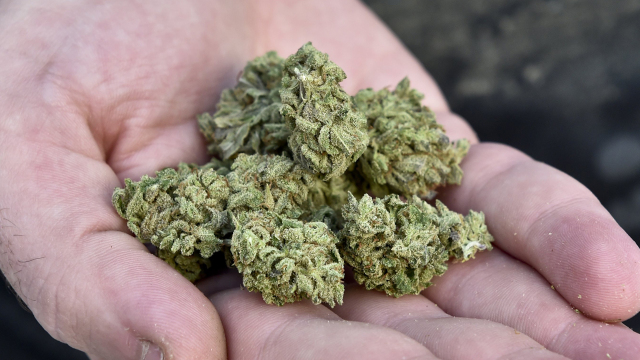
When a prosecutor charges that a defendant was in actual possession of illegal drugs, it means that the drugs were on the defendant’s “person” – for instance, in the defendant’s purse, backpack, pocket, or shoes and socks – and that the defendant was caught “red-handed.”
In an actual possession case, the testimony of the police officer who discovered the illegal drugs will usually be enough for a conviction.
But a defendant who tried to swallow, flush, or dispose of illegal drugs may also be convicted of actual possession with circumstantial evidence.
WHAT IS “CONSTRUCTIVE” POSSESSION?
If illegal drugs are discovered, not on your person, but at your home or in your vehicle, your locker or desk at your workplace, or your rental storage space, you’ll probably be charged under state law in Washington with the constructive possession of illegal drugs.
If someone has control or dominion over the space or location where illegal drugs are discovered, that person may be charged with constructive possession.
Guilt for constructive possession is sometimes easy for the state to prove – and sometimes difficult. If police officers discover illegal drugs in your refrigerator or medicine cabinet, and the search was conducted legally, you’ll probably be convicted.
WHY IS CONSTRUCTIVE POSSESSION SOMETIMES DIFFICULT TO PROVE?
Constructive possession can be tough to prove in other circumstances.
Let’s say that you’re attending college and you share a three-bedroom rental residence with two other college students. If you did not have exclusive, personal control and dominion over the refrigerator or medicine cabinet, it may be difficult for the state to obtain a conviction.
However, in the same home, if illegal drugs are found, for example, under the defendant’s own mattress or in the defendant’s own closet, a conviction is more likely.
In other words, if a defendant lives alone, or if a defendant is the only person in a vehicle when illegal drugs are found, that’s sufficient in most cases to prove possession, but if others share the residence or if others were also occupants in the vehicle, the state must offer stronger evidence.
WHAT ARE THE POSSIBLE LEGAL DEFENSES IN A POSSESSION CASE?
The details, of course, are different in each drug possession case, so if you are charged with illegal drug possession in the state of Washington, you will need to have an experienced Seattle criminal defense attorney explain how the state’s drug laws will apply in your specific situation.
An experienced defense lawyer in a drug possession case might offer one of these legal defenses on a client’s behalf:
1. Police officers illegally conducted their search to discover the drugs.
2. The defendant did not have control and dominion (or did not have exclusive, personal control and dominion) of the space or location where the illegal drugs were discovered.
3. The defendant didn’t know the illegal drugs were there.
4. The defendant was actually legally entitled to have the drugs.
5. The drugs were not in fact illegal.
6. The drugs belonged to another person or persons.
In this state, the precise charge for drug possession will depend on the specific drug, the quantity, and the defendant’s criminal record.
HOW IS DRUG POSSESSION CHARGED? WHAT ARE THE PENALTIES?
A drug possession charge in the state of Washington may be prosecuted as a misdemeanor, a gross misdemeanor, or even as a felony.
In Washington, these maximum penalties may be imposed on defendants convicted of these charges:
1. Misdemeanor: ninety days in jail and a $1,000 fine
2. Gross misdemeanor: 364 days in jail and a $5,000 fine
3. Class C felony: five years in prison and a $10,000 fine
4. Class B felony: ten years in prison and a $20,000 fine
5. Class A felony: life in prison and a $50,000 fine
These are maximum sentences. No one is sentenced to life for possessing a small quantity of illegal drugs for personal use.
WHAT IS CONSIDERED WHEN A POSSESSION PENALTY IS IMPOSED?
When a defendant is convicted of illegal drug possession in Washington, a judge will consider these questions when determining precisely what sentence to impose:
1. What drugs were involved? In what quantity?
2. Were the drugs intended for sale or for personal consumption?
3. What is the defendant’s prior criminal record, if any?
4. Was a weapon involved? Or was a weapon in the defendant’s possession?
5. Is the defendant a juvenile or an adult? Was a juvenile involved with the crime?
DOES WASHINGTON OFFER ALTERNATIVE SENTENCING OPTIONS?
In drug possession cases, Washington’s judges now routinely order a chemical dependency evaluation before imposing a sentence. Some defendants will qualify for alternative sentencing.
Washington’s courts offer first-time offender and pretrial diversion programs that stress treatment and counseling over punishment and incarceration.
If you are charged with the possession of illegal drugs in the state of Washington, it is imperative to obtain the advice and representation of an experienced Seattle criminal defense attorney as quickly as possible.
HOW CAN A CRIMINAL DEFENSE LAWYER HELP?
Your attorney will protect your rights, explain the possible sentencing options, and fight for the best possible conclusion to your case.
In a drug possession case, if the police violated your rights, or if the drugs were not, in fact, yours, your attorney will work aggressively for an acquittal or a dismissal of the charge.
If the evidence against you is strong and a conviction is certain, your lawyer will explain the sentencing options and argue on your behalf for the best possible alternative sentencing.
Don’t let a small amount of illegal drugs take your freedom or ruin your future. If you are charged with possessing drugs illegally in the state of Washington, and your future is at stake, get the legal help you need as quickly as possible.